
 Oct 23, 2026
Creatine Monohydrate: What It Is and Why It's the Form to Choose
What creatine monohydrate is, what it does, and why it beats every other form of creatine.
By Roy Anderson, Founder of GUMO · Reviewed by Koji Wang, Physiotherapist · Last updated 23 October 2026
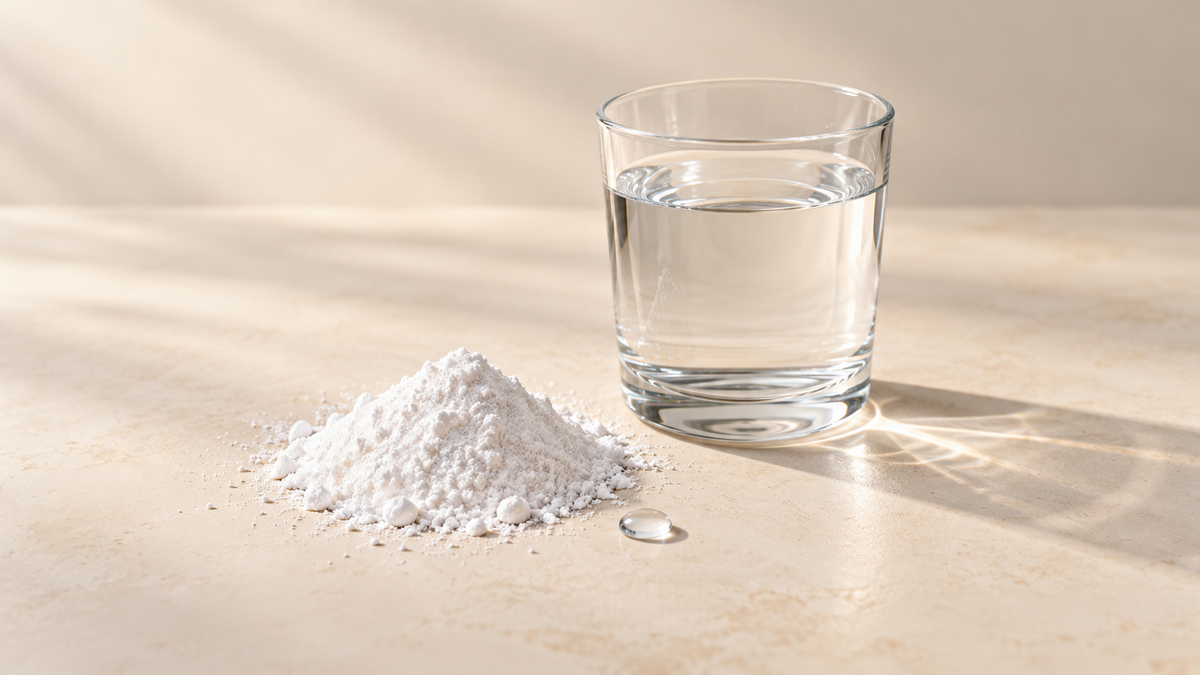
Creatine monohydrate is creatine bound to one molecule of water. It's the form behind almost all creatine research, and nothing else has been shown to work better. It also happens to be the cheapest. If you're taking creatine, this is the one to take.
Nearly everything you'll read about creatine, whether it's about strength or safety, comes from studies on creatine monohydrate. There are now more than 500 peer reviewed publications on creatine supplementation. So when a brand tells you its fancy new version beats monohydrate, the bar it has to clear is very high.
The short version
- Creatine monohydrate is the most researched, best supported and cheapest form of creatine.
- Its main benefits: more energy for short, hard efforts, and more strength and muscle when combined with training.
- The standard dose is 3 to 5g a day. Loading is optional.
- It's about 88% creatine by weight, and research doses already account for that.
- Micronised creatine is the same thing in finer particles. It mixes better but works the same.
- Purity varies between products, so look for independent testing.
What is creatine monohydrate?
Creatine monohydrate is creatine with one water molecule attached, which is what "monohydrate" means. That water makes it stable as a dry powder, so it stores well and doesn't break down in the tub.
Creatine itself is a compound your body makes from three amino acids (glycine, arginine and methionine), mostly in the liver and kidneys. According to the Australian Institute of Sport, you make about 1g a day and get roughly another 1g from food, mainly meat and fish. About 95% of it is stored in your skeletal muscles, according to the ISSN, with smaller amounts in the brain.
The creatine in supplements isn't extracted from meat. It's made from non-animal raw materials, which is why plain creatine monohydrate is suitable for vegetarians and vegans.
How much creatine is actually in creatine monohydrate?
About 88% by weight. The water molecule makes up the rest, so 5g of creatine monohydrate gives you roughly 4.4g of creatine itself.
You don't need to adjust for this. Nearly all research uses creatine monohydrate, so the recommended doses (3 to 5g a day) are already expressed as monohydrate. Just follow the dose on the label.
Creatine monohydrate benefits: what does it actually do?
It tops up the creatine stored in your muscles, which helps them produce energy quickly during short, intense efforts. That's where all the benefits come from.
Your muscles store creatine as phosphocreatine. When you lift something heavy, sprint or push through a hard interval, your muscles burn through their main energy molecule, ATP, in seconds. Phosphocreatine helps rebuild it on the spot. More stored creatine means a bit more fuel for that final rep or extra burst.
Over weeks of training, that extra work adds up. Mayo Clinic notes that creatine, especially combined with resistance training, can lead to greater gains in strength, muscle size and athletic performance. It also helps older adults who do resistance exercise build strength. Research into memory and brain health is promising but still early.
People with lower creatine stores to begin with, like vegetarians, tend to see bigger benefits. Women often have lower total stores too (see creatine for women). For the full rundown on benefits, see what is creatine, and for how creatine compares with protein, pre-workout and the rest, see our guide to gym supplements.
Why creatine monohydrate is the best form of creatine
Because it has by far the most evidence behind it, and nothing else has beaten it. A 2021 review in the Journal of the International Society of Sports Nutrition, written by 11 leading creatine researchers, looked at this exact question and concluded that other forms aren't superior to monohydrate.
Here's how the common alternatives compare:
| Form | Research behind it | What we know |
|---|---|---|
| Creatine monohydrate | Extensive | The form used in almost all studies on strength, muscle, safety and dosing. Cheapest per gram. |
| Creatine HCl (hydrochloride) | Limited | Marketed as dissolving more easily, but there's little good evidence it works better in your muscles. Usually costs more. |
| Creatine ethyl ester | Limited | In one study it raised muscle creatine less than monohydrate. Not recommended. |
| Buffered creatine (e.g. Kre-Alkalyn) | Limited | The few studies comparing them found it works about as well as monohydrate, not better. |
| Creatine nitrate | Limited | Very little research, and no clear advantage shown. |
| Liquid creatine | Limited | Creatine breaks down in liquid over time. Not recommended. |

A 2011 review of novel creatine forms, which looked at HCl, ethyl ester, buffered and liquid versions, came to the same conclusion. My take: if another form costs more and promises more, it needs much better evidence than it currently has. More on the most popular alternative in creatine HCl vs monohydrate.
Micronised vs regular creatine monohydrate
Micronised (or micronized) creatine monohydrate is the same compound, just ground into finer particles. That helps it mix into water more easily and feel less gritty, but it doesn't make it work any better once it's in your body.
If plain creatine powder leaves sludge at the bottom of your glass, micronised is worth the small extra cost. If you take creatine in a shake, capsule or gummy, it doesn't matter much.
What do "Creapure" and "pharmaceutical grade" mean?
Creapure is a brand of creatine monohydrate made in Germany. Some supplement brands use it as their raw ingredient and put the logo on the pack as a sign of quality. It's still creatine monohydrate, though, not a different form.
"Pharmaceutical grade" and "100% pure creatine monohydrate" are phrases you'll see on a lot of tubs. They sound reassuring, but neither tells you how the batch in your hands actually tested. Independent testing does.
Is all creatine monohydrate the same?
The molecule is, but product quality isn't. When creatine is made poorly, it can contain leftover by-products or break down into creatinine, a waste product your body can't use.
There's data on this. A 2011 study tested 33 creatine supplements and found creatinine was the main contaminant, at more than 100 mg/kg in 44% of samples. Gummies are even harder to get right, because the creatine has to survive cooking and setting. Independent lab tests have found plenty of underdosed creatine gummies on the market (we cover the data in creatine gummies vs powder).
Mayo Clinic's advice is to choose a product that uses third party testing. In practice, look for published lab results for your batch, or a certification like Informed Sport.
A note on bias: GUMO makes creatine gummies, so we have an interest here. That's why every claim in this guide links to its source.
Creatine monohydrate, tested every batch. Four GUMO Creatine Gummies give you 5g of creatine monohydrate with no sugar, and every batch is lab tested in Australia with the results published. Rated 4.9 stars from 500+ reviews.
How to take creatine monohydrate
Take 3 to 5g a day, every day, including rest days. Timing doesn't matter much, so take it whenever you'll remember it.
If you're using powder, mix it into water, juice or a shake and drink it straight away. The AIS notes creatine breaks down into creatinine once it's in liquid, so don't mix it up in advance. Bulk Nutrients, one of the most popular Australian brands, notes that a flat teaspoon of its powder is about 3.3g, which is handy if your tub doesn't come with a scoop.
You can do a loading phase of about 20g a day for 5 to 7 days to fill your muscles faster, but you don't have to. 3 to 5g a day gets you to the same place in about four weeks. For the details:
For what it's worth, I've tried creatine HCl and felt no difference from monohydrate. These days I take four GUMO creatine gummies every morning with my coffee. We made them with creatine monohydrate because it has far more research behind it than any other form. I wouldn't pay extra for any of the alternatives.
Is creatine monohydrate safe?
For healthy adults, yes. Mayo Clinic rates creatine "generally safe" and says it's likely safe to take at recommended doses for up to five years, which is as long as studies have run.
The most common side effect is weight gain, which is extra water stored in your muscles rather than fat. Large single doses can upset your stomach. Studies in healthy people haven't found that creatine harms the kidneys at recommended doses, but it can raise creatinine on a blood test, so tell your doctor you take it.
Mayo Clinic flags caffeine as a possible interaction: large amounts might reduce how well creatine works, though more research is needed. If you have kidney disease, are pregnant or breastfeeding, are under 18, or take regular medication, check with your GP first. More in creatine side effects and who should avoid creatine.
How much does creatine monohydrate cost in Australia?
Plain creatine monohydrate powder is cheap. A pouch from Bulk Nutrients costs $24 to $48 depending on size, which works out to under 50 cents per 5g serve. You'll also find it at Chemist Warehouse, Woolworths and Coles.
Capsules and gummies cost more per gram because they're harder to make and more convenient to take. Whether that's worth it comes down to whether you'll actually take powder every day. See creatine powder vs capsules vs gummies for a full price comparison.
Frequently asked questions
Is it bad to take creatine monohydrate every day?
No. Creatine monohydrate is designed to be taken every day. Daily use keeps your muscle stores topped up, and studies of up to five years in healthy people haven't found harmful effects.
What happens after a month of taking creatine?
After about a month of 3 to 5g a day, your muscle creatine stores are full. You may find you can squeeze out an extra rep on hard sets, and the scales might be up slightly from water in your muscles. The bigger changes in strength build over the months after that, as long as you keep training.
Why don't doctors recommend creatine?
Creatine is a supplement, not a medicine, so it isn't something doctors prescribe to treat a condition. That doesn't mean it's considered unsafe: Mayo Clinic rates it generally safe for healthy adults. Do tell your doctor you take it, though, since it can raise creatinine on a blood test and look like a kidney issue when it isn't.
Will creatine monohydrate burn belly fat?
No. Creatine doesn't burn fat. It can help you train harder and hold on to muscle while you lose weight, but fat loss still comes down to your overall diet and activity.
Who should avoid creatine monohydrate?
People with kidney disease, anyone pregnant or breastfeeding, and under 18s should talk to a doctor before taking creatine. The same goes for anyone on regular medication.
What foods are high in creatine?
Red meat and seafood are the richest sources. A typical meat-eating diet gives you about 1g a day. Eggs, dairy and plant foods contain very little, which is why vegetarians usually have lower stores.
Is creatine monohydrate a steroid?
No. Creatine is a natural compound made from amino acids, and it doesn't act like a hormone. The 2021 JISSN review addresses this directly. More in is creatine a steroid?
Does creatine monohydrate cause hair loss?
There's no good evidence it does. A 2025 trial gave men 5g of creatine monohydrate a day for 12 weeks and found no difference from placebo in DHT or any hair measure. More in does creatine cause hair loss?
Does creatine monohydrate expire?
Dry creatine monohydrate is a very stable powder, which is why it keeps well when stored sealed, cool and dry. Stick to the best before date on the pack, and see does creatine expire? for more.
We keep this guide up to date
16 October 2026: guide published, with current Australian prices. Reviewed by Koji Wang.
23 October 2026: every source re-checked against the original study, a few figures corrected, and new questions answered. Reviewed by Koji Wang.
Sources
- Antonio J. et al. (2021). Common questions and misconceptions about creatine supplementation: what does the scientific evidence really show? Journal of the International Society of Sports Nutrition, 18(1), 13
- Mayo Clinic: Creatine (updated April 2026)
- Australian Institute of Sport: Creatine (Group A supplement)
- Kreider R.B. et al. (2017). International Society of Sports Nutrition position stand: safety and efficacy of creatine supplementation
- Jäger R. et al. (2011). Analysis of the efficacy, safety, and regulatory status of novel forms of creatine. Amino Acids
- Moreta S. et al. (2011). Levels of creatine, organic contaminants and heavy metals in creatine dietary supplements. Food Chemistry, 126(3), 1232 to 1238
- Bulk Nutrients Creatine Monohydrate (price and serve reference)
About the author
Roy Anderson is the founder of GUMO and has taken creatine daily for over three years. He started GUMO after seeing brand after brand sell creatine gummies with little or no creatine inside. Every batch of GUMO Creatine Gummies is third party lab tested in Australia, with the results published. Read more about Roy →
Related Articles
Oct 23, 2026
 Oct 23, 2026
 Oct 23, 2026

Try GUMO Risk-Free for 30 Days.
Experience the difference with complete confidence. If you're not satisfied within 30 days, we'll refund your purchase - no questions asked.
- 30-Day Money-Back Guarantee
- Fast Shipping
- Premium Ingredients
- Trusted by Thousands